LIVING APRIL | THINKING APRIL | DREAMING APRIL
A space for sharing to celebrate and reflect on April
Teatro Só proposes an experimental creative practice that, each year, occupies Rua Sousa Prado as a site for artistic experimentation, bringing together a series of interventions with an exhibition-like character.
Listening to the place of revolution and freedom today to understand how it influences the way we project tomorrow. This is a shared reflection between artists and the local community on revolution and freedom, exploring how April contributed to shifting the perception of these symbols from both an aesthetic and political perspective.




ABRIL 2025
Rua Souza Prado, Odemira
RUA VIVA | A REVOLUÇÃO É UM LUGAR COMUM
[Daniel Pinho + ARDE Atelier]
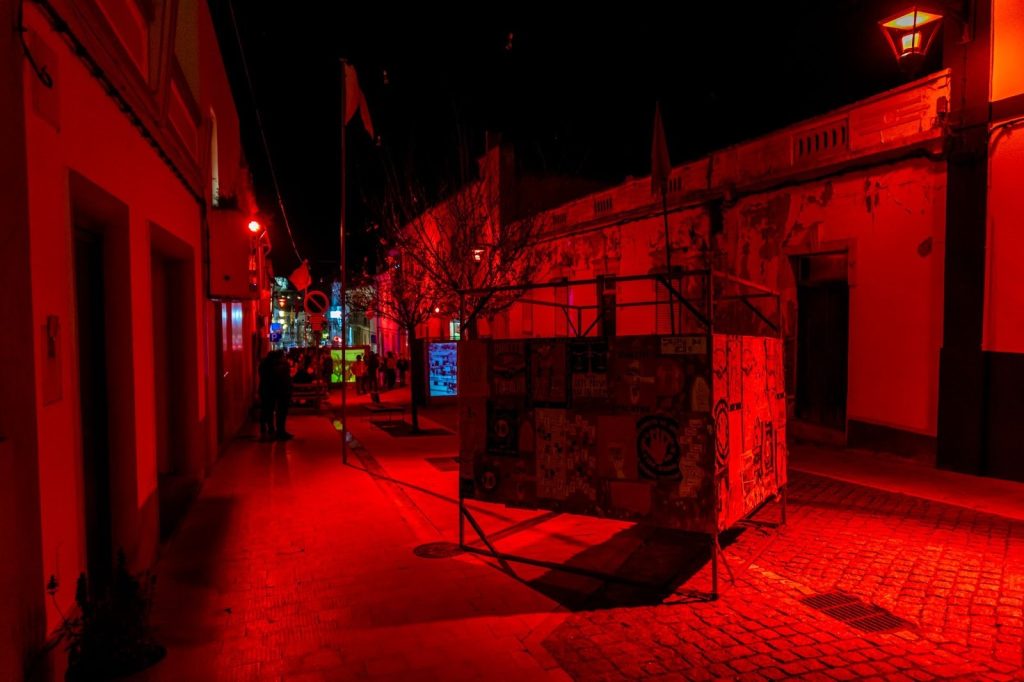
The lighting atmosphere does not merely highlight the street; it transforms it into a living element of collective memory. The intervention proposes that art and history meet in this space. The exhibitions and interventions that take place there are invitations to reflect, to celebrate the revolution, and to consider what freedom means in the present
Red serves as the backdrop for this encounter between art and history, acting as a metaphor for the struggle for freedom won by the unity of a people who took to the streets on April 25, 1974.
PORTADAS DE LIBERDADE
[Gonçalo Condeixa + Alunos da Escola Secundária de Odemira]
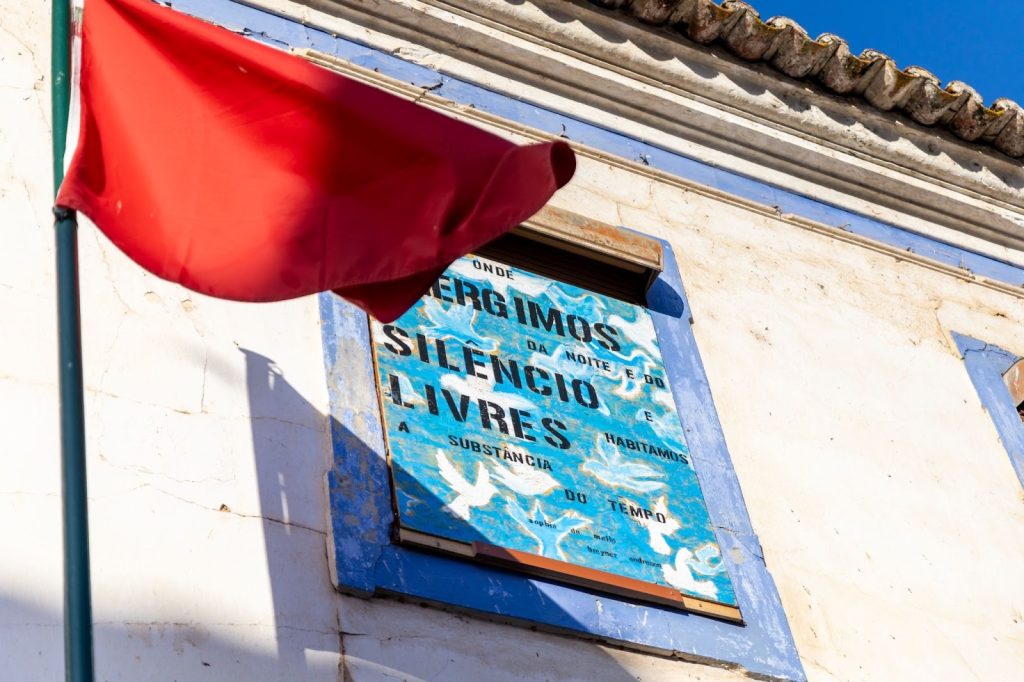
In an abandoned building, six wooden panels take the shape of missing windows and doors, transforming into canvases for a collective mural.
Created by art students from the 10th, 11th, and 12th grades of secondary education in Odemira, under the guidance of teacher Gonçalo Condeixa, “Portadas de Liberdade” draws inspiration from the iconic poster “A poesia está na rua”, designed by Maria Helena Vieira da Silva at the request of Sophia de Mello Breyner Andresen, an enduring symbol of 25 April 1974.
The paintings evoke the spirit of the April and are accompanied by words from the poet, extracted from her speech at the Constituent Assembly. Between images and verses, the mural gives voice to silent walls, reviving collective memory and projecting the transformative power of art into the present.
In this building marked by abandonment, collective creation reclaims public space and reaffirms that freedom – like poetry – never closes, but opens itself to the world.
A GAIOLA E A FISGA
[Gonçalo Condeixa]
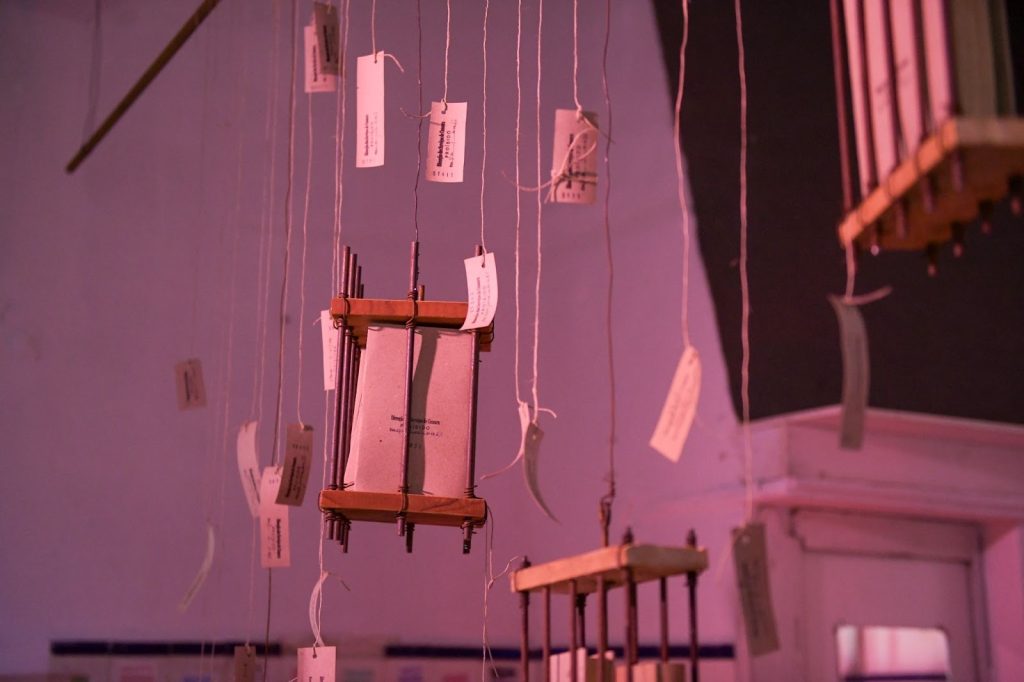
Between suspended bars, imprisoned words await an interrupted flight. Books once silenced rest within the guts of cages, where freedom trembled under the weight of censorship.
The hooks point to the invisible—hunters of ideas, ambushed in the darkness of fear. On the ground, torn scraps of paper wound the earth, reminding us that the word is not always born intact. The crossed-out, cut, and denied lines are echoes of suffocated voices.
Disguised traps wait for birds that never arrive, yet memory persists, restless. Here, every torn page is a mutilated wing, every closed book is a flight unfulfilled. Freedom – even when hunted – survives.
This artistic installation was created with the support of the members of the Associação de Paralisia Cerebral de Odemira (Odemira Cerebral Palsy Association).
LIBERDADE POÉTICA
[Sandra Santos]
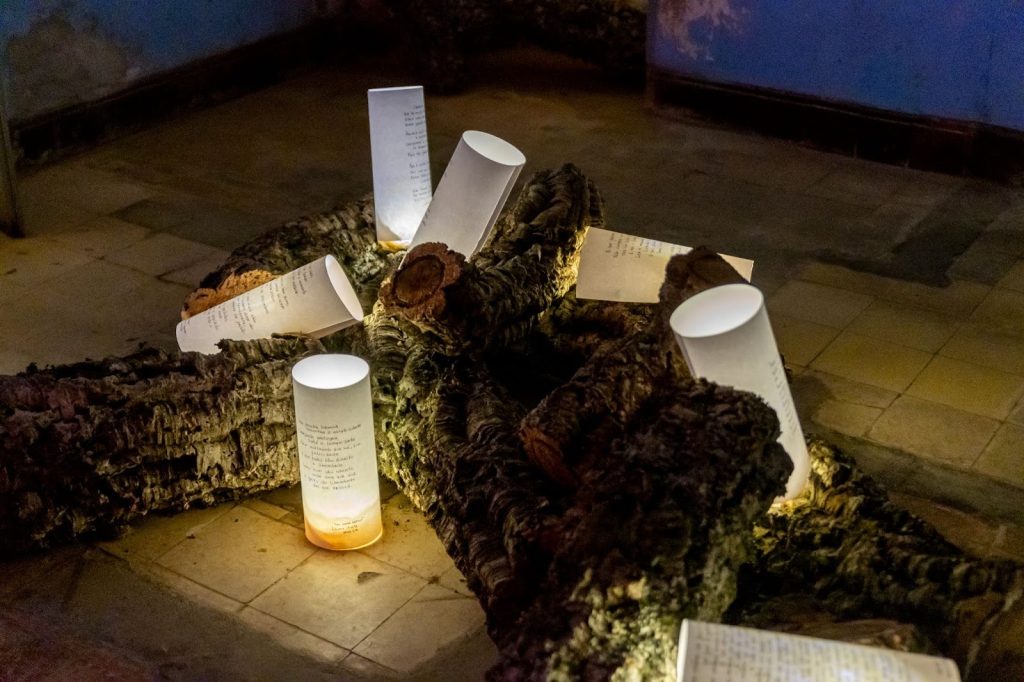
An installation that invites a journey through poetry, through words that poetically unite to proclaim freedom. From Portuguese authors before and after the revolution to contemporary society: how is freedom defined? Students from the Professional School and inmates from the Odemira Prison Establishment give their voice to freedom.
In this space of “poetic freedom,” lights illuminate poems while voices and bodies proclaim freedom through poetic expression.
Past, present, and future meet in a musical, figurative, and creative language that reveals freedom in verse. It unveils different meanings of this much-longed-for condition. To be free and profoundly human brings the poetic being into the street.
KANTAR ABRIL
[Ivo do Carmo]
An installation that evokes the songs of April 25th, censored songs, and post-revolution anthems, while also featuring selected songs and events from the international music scene of that era. This approach fosters contextualization and contrasts the meaning of April, always open and under construction.
KANTAR ABRIL is a collective celebration, an invitation to remember, reflect, and experience democracy through art, positioning the public as the main protagonist in building a freer and more equal future.
RETRATOS DE ABRIL
[Nuno Torres]
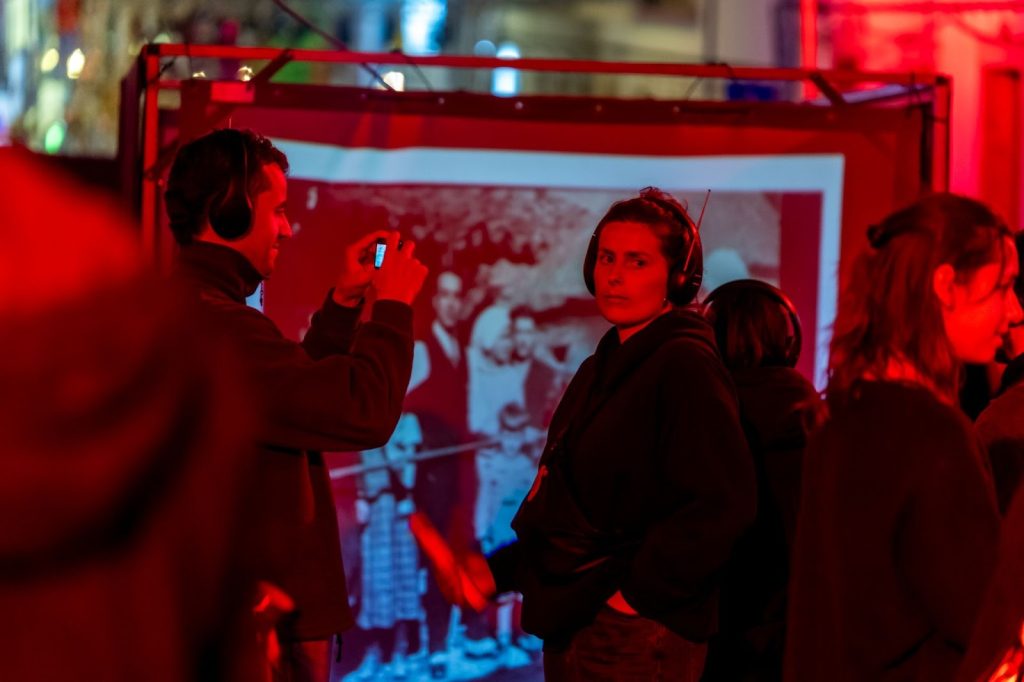
Starting from the theme of the 50th anniversary celebrations of April, we revisited memories from that period. We visited nlocal organisations and residents’ associations across Odemira, encountering diverse faces and stories that allowed us to create this exhibition, to which we added a collection of images from the Odemira Municipality’s archive.
The exhibition comprises a visual dimension composed of portraits of living faces who experienced April, alongside photographs revealing places from Odemira’s past. The sonic dimension is built upon a selection of stories gathered here and there, articulated with sound archives that marked the April Revolution.
OLHO DE JUDAS
[Gonçalo Condeixa + Nuno Torres + Sérgio Fernandes]
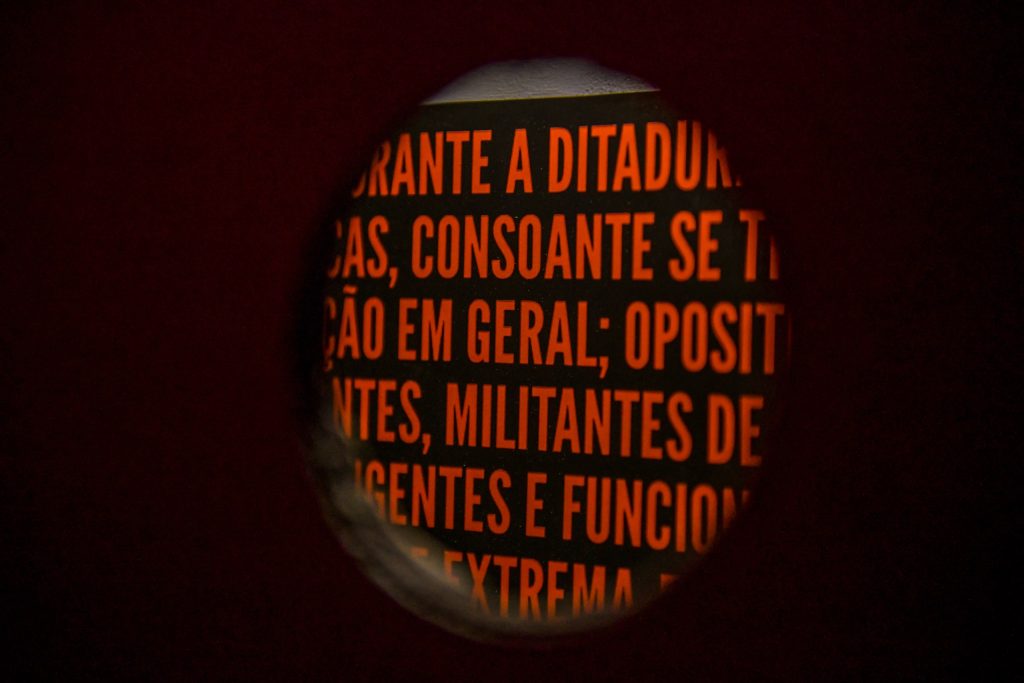
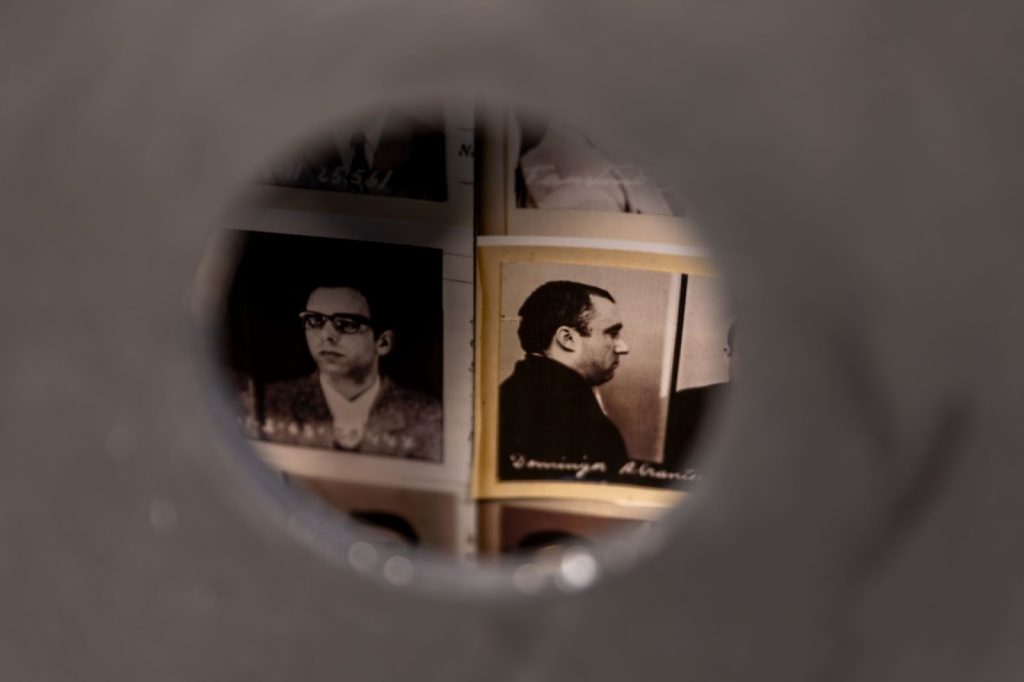
An installation that invites the public to immerse themselves in the reality of political prisoners, exposing the oppression, isolation, and violence endured within the cells. The centerpiece is a black cube, enigmatic and sealed, where only small circular openings (“olhos de Judas”) allow fragmented glimpses of the interior.
Each opening directs the eye to different details of the space: an austere bed, a wooden coat hanger, and a worn blanket, all illuminated by an old oil lamp whose faint light highlights the precariousness and loneliness of the cell. The impossibility of seeing the whole forces the visitor to mentally reconstruct the scene, feeling the frustration and claustrophobia of the incarcerated.
Scattered across the cube, other niches reveal object-sculptures that symbolize the feelings, states of mind, and experiences of the prisoners.
Beyond the visuals, the installation incorporates sound as a sensory element. Through its openings, the speech by Sophia de Mello Breyner at the Assembly of the Republic in 1974 may echo. In this historic moment, the poet denounces not only censorship and the degradation of culture during the dictatorship, but also the very existence of the political prisoner as the ultimate symbol of repression. Her testimony resonates as an accusation and a call to collective memory, reaffirming the essential role of culture in building a free and just society.